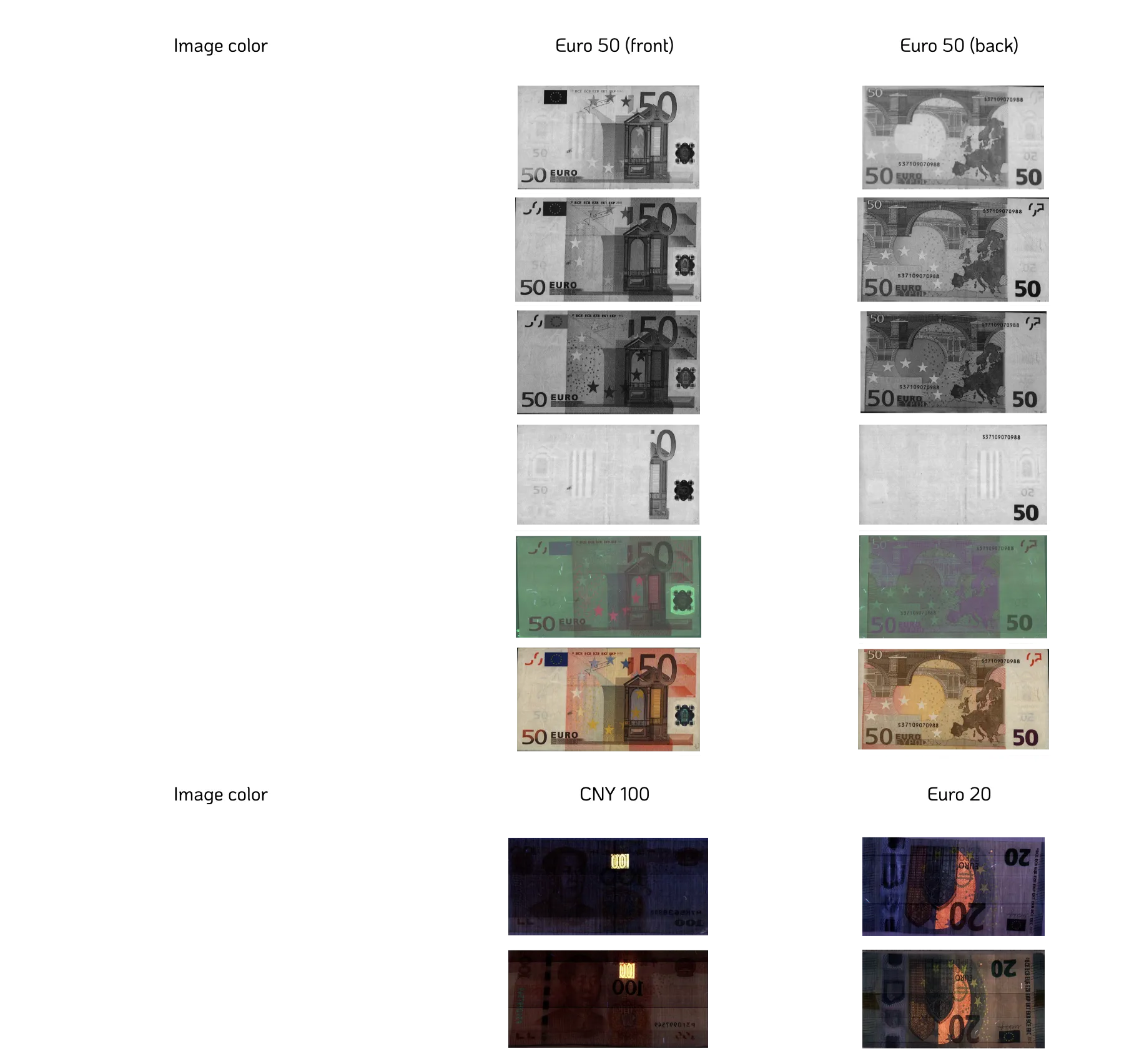
High-resolution linear acquisition for visual media analysis. Depending on the configuration, it supports select illuminations (visible, IR, UV) to highlight color details, watermarks, fibers/fluorescent effects, and material characteristics.
BANKING APPLICATIONS
CIS
Contact Image Sensor

CIS – Contact Image Sensor
The CIS is the optical heart of every bank reader or validator.
Capture the image of the moving banknote, illuminating it with different wavelengths of light to reveal every detail:
- White light (RGB) → visible print, colors and text.
- Infrared (IR) → invisible inks and special materials.
- Ultraviolet (UV) → fluorescent fibers and security signs.
Each image is acquired in real time with a 1:1 ratio, maintaining perfect dimensional fidelity even at high transport speeds.
Thanks to its compactness, it can be integrated into ATM systems, sorters, validators, check scanners or passports without major mechanical modifications.
MAIN FEATURES
- Resolution : 100–600 DPI
- Scanning widths : 12–216 mm
- Focus : 0–0.9 mm from glass (0.7 / 1.1 / 1.8 mm thick)
- Illumination : up to 6 LEDs per channel (RGB + IR 850/880/940 nm + UV 260–370 nm)
- Interfaces : analog or digital (LVDS), with roadmap towards USB 3.0, GigE and CoaXPress
- Operating clock : 8–32 MHz (up to 50 MHz on dedicated versions)
- Configurations : reflection, transmission and UV in 18 mm thick “All-in-One” version

MAIN ADVANTAGES
- Multi-spectral reading to integrate RGB, IR, UV, reflection and transmission in a single module.
- High design flexibility in terms of resolution, useful width and optical configuration.
- Compact structure that can be easily integrated into banking modules.
- Analog or digital interface for easy system integration.
- All-in-one solution available to reduce complexity and clutter.
APPLICATIONS
- Check scanner
- Sorter
- ATM
- Counter
- Retail terminal
- Ticket vending machine
Lights: the secret to reliability
The lighting system is what distinguishes a banking CIS from a common camera.
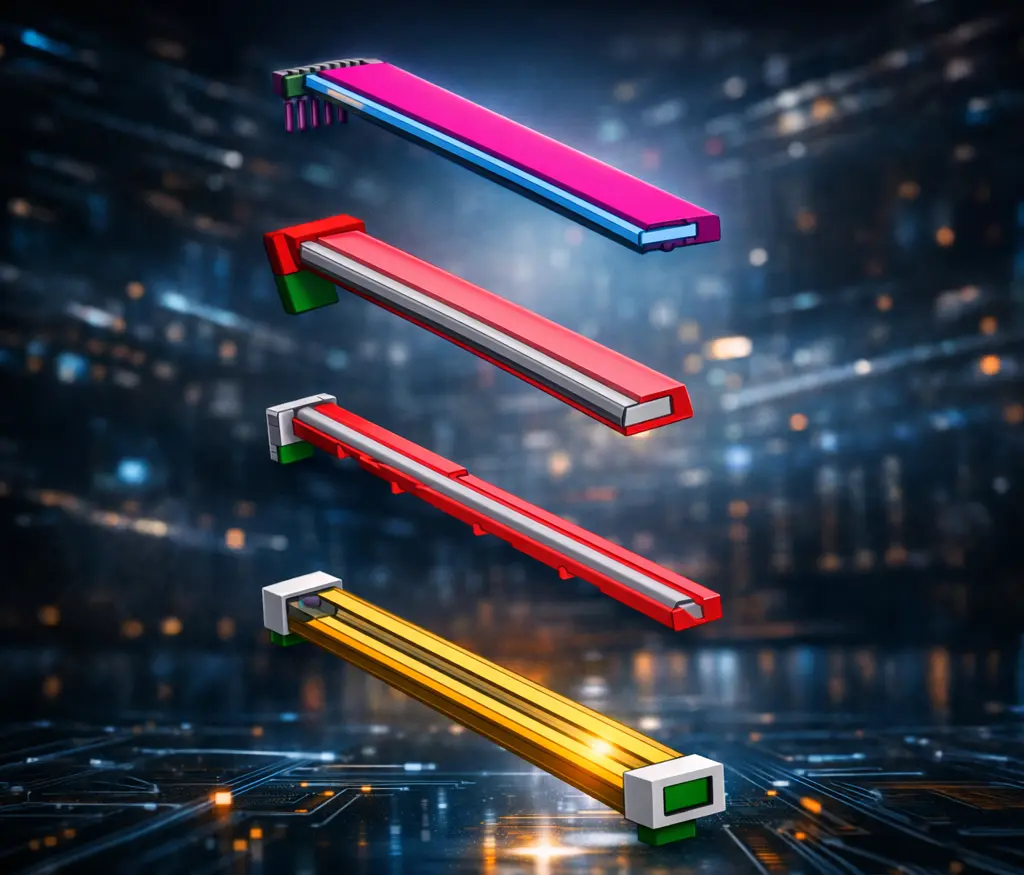
Inside the module, up to six LEDs of different colors are integrated in the same optical package, with configurations designed to adapt to the type of control:
- Reflective (Reflection Light) : Light hits the surface and returns to the sensor; useful for checking printing and colors.
- Transmissive (Transmission Light) : Light passes through the note, highlighting watermarks, security threads and backlit areas.
- UV (Ultraviolet Light) : Used to reveal fluorescent markings invisible to the naked eye.
- IR (Infrared Light) : used to distinguish special inks or materials with different reflectivity.
These sources can be combined or alternated in time sequence (time-multiplex), so the sensor acquires multiple images under different lighting conditions, all perfectly synchronized.
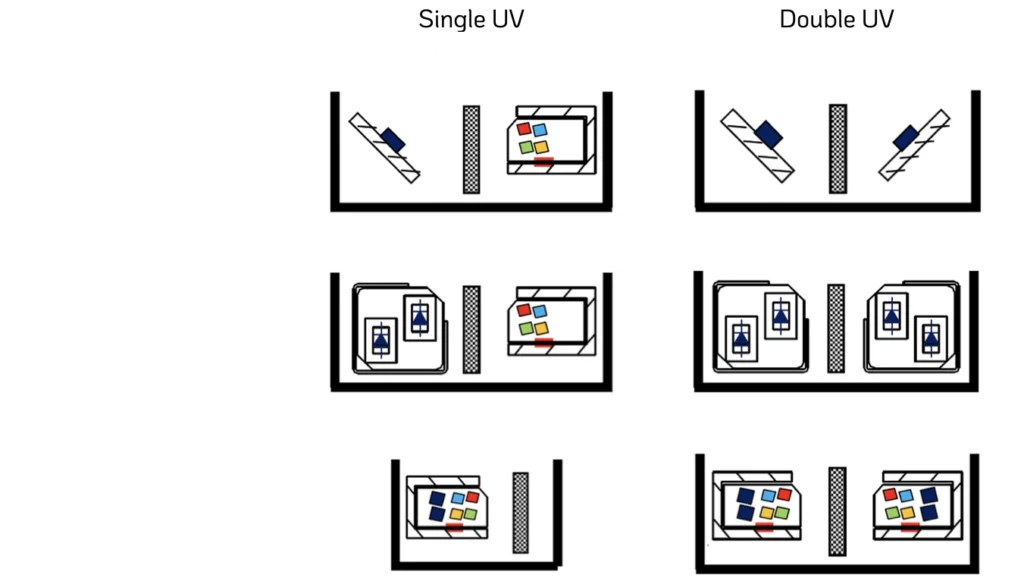
Structure of the light source
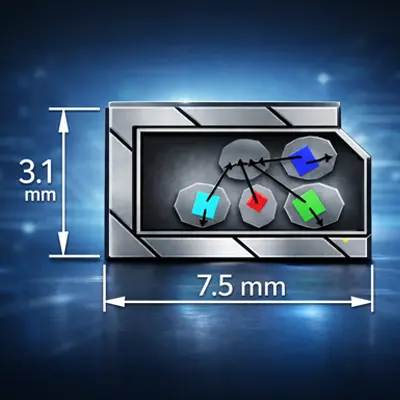
Common
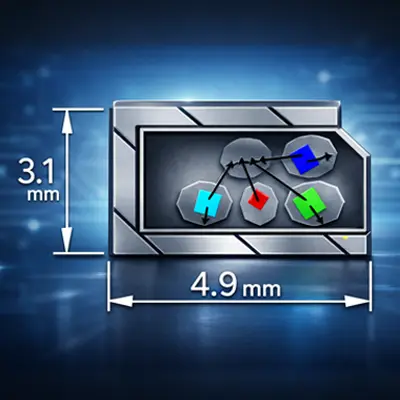
Minimization
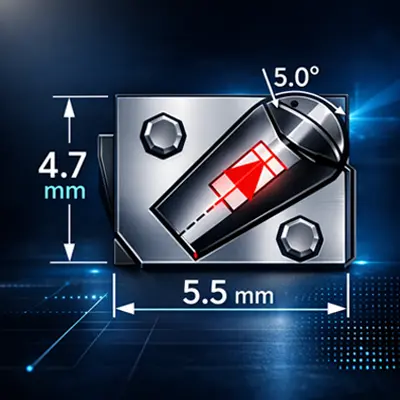
50° inclination
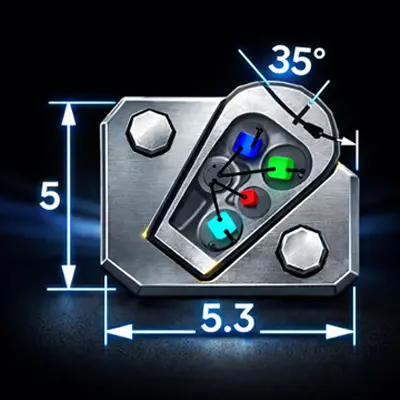
35° inclination
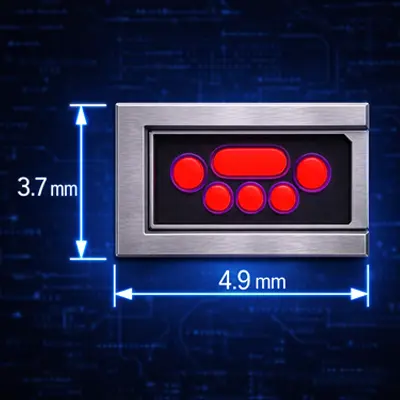
UV light source
The Glass Cover – the sensor window
Each CIS is protected by a front optical glass through which the light passes to illuminate the banknote. This surface not only protects the internal components: it is a functional part of the optical path and contributes to the quality and stability of the image.
MAIN FUNCTIONS
- Mechanical protection: isolates the sensor and lenses from dust, impacts and micro scratches due to the continuous passage of banknotes.
- Optical precision: The thickness of the glass affects the focal point; by varying the refractive index, the focal point shifts relative to the document plane.
- Reliability in paper passage: the edges of the glass can be shaped (e.g. chamfered) to reduce the risk of jamming during sliding.
All glasses are made of highly transparent optical material (index n ≈ 1.51) and may include:
- anti-reflective (AR) coating,
- anti-scratch treatment (HC),
- anti-static option (AS) to prevent dust accumulation.
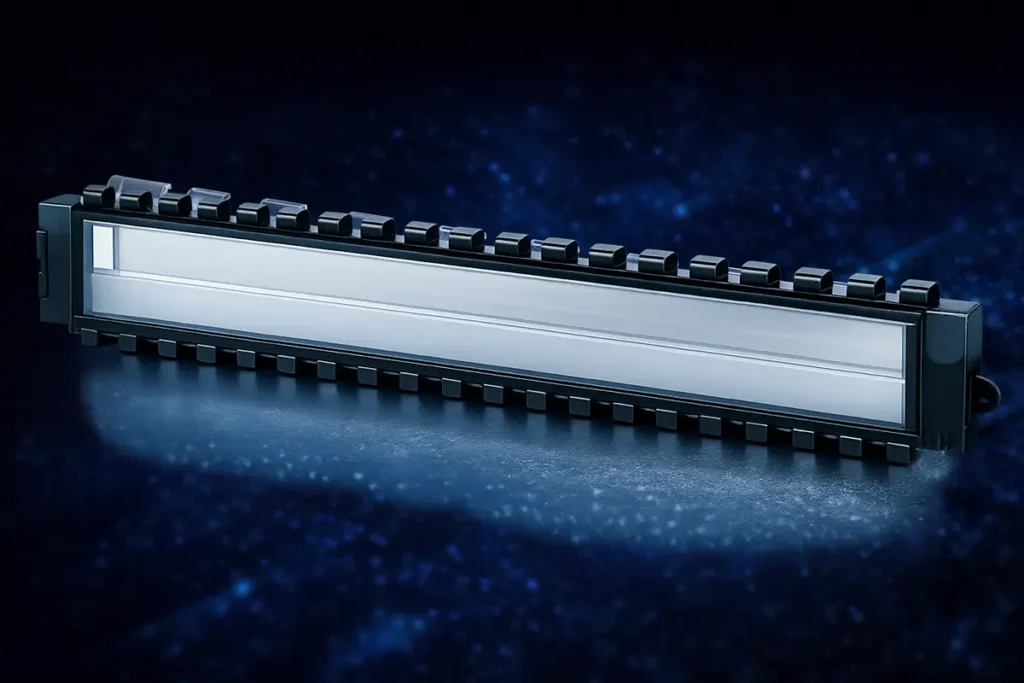
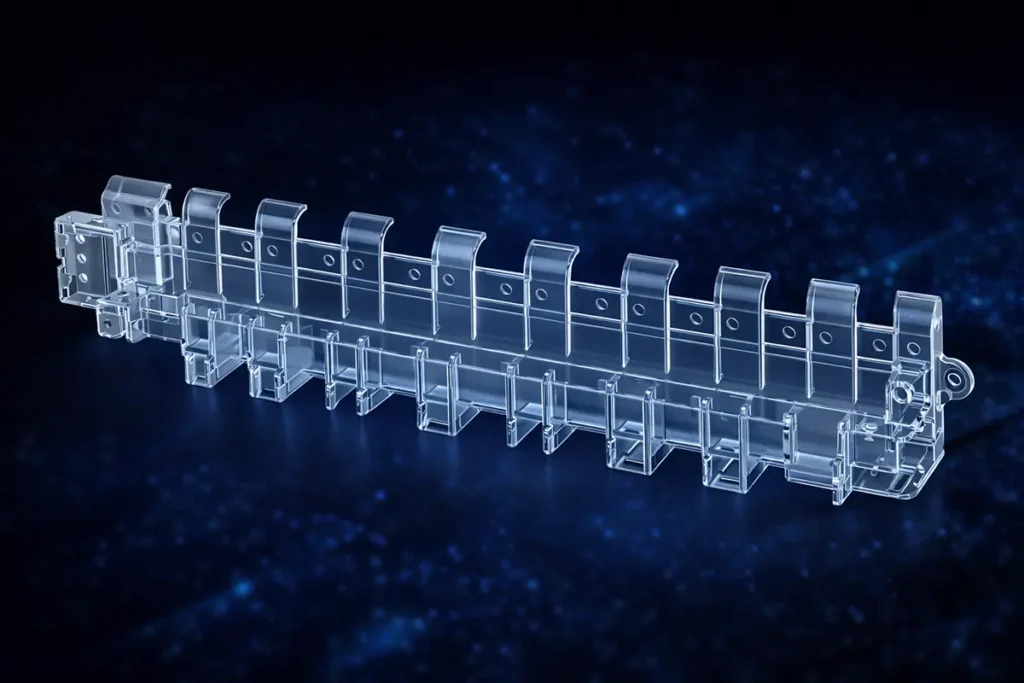
COMB STRUCTURE (OPTIONAL)
In some mechanical integrations, the front contact area can be designed with a comb geometry: a series of “toothed” supports that reduces the contact area between the banknote and the cover.
Practical effect: less friction, smoother sliding and less tendency to drag dust or mark the surface.
The thickness of the glass changes the apparent optical distance between the lens and the document plane:
- thinner glass → further focus point
- thicker glass → focus point closer to the glass
For this reason the thickness is defined and kept consistent with the optical calibration of the CIS.
Main optical specifications
Different structures of UV light source

Mini optical structures: directing light in the right way
Image quality depends not only on the LEDs, but also on how the light is channeled and reflected inside the sensor.
For this purpose, the modules use several optical microstructures — small geometries integrated into the CIS body — that guide light precisely to the document surface.
MAIN TYPES OF MINI-STRUCTURES
- Single Light-Guide : the light hits the document from one side, a compact solution for narrow forms or frontal reading.
- Double Light-Guide : Double cross-illumination for greater uniformity and reduced shadows; ideal for banknotes with raised or folded edges.
- Rod Type : A cylindrical optical bar (rod lens) that distributes light evenly along the entire length of the sensor.
- Array Type : Small UV or IR LEDs arranged in arrays to focus light on specific areas or to boost power on critical sections.
- Inclined 35° / 50° : the controlled inclination of the rays reduces reflections and improves the visibility of holographic micro-reliefs and OVI (Optically Variable Ink).
WHY IT’S IMPORTANT
Each banknote has different surfaces — shiny areas, metallic inks, translucent areas.
A single illumination isn’t enough to reveal them all. Thanks to these optical microstructures, the CIS can:
- maintain constant brightness even on difficult surfaces, reduce reflections and artefacts,
- obtain stable contrast between opaque and reflective areas,
- ensure perfect images even at high scrolling speeds.
Mini structure of the light source
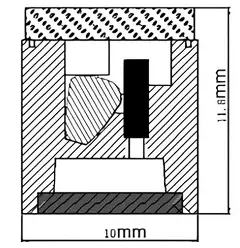
Single Light Guide Structure
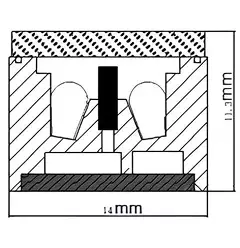
Double Light Guide Structure
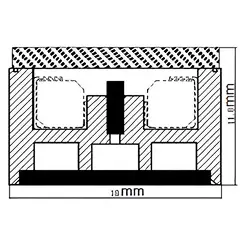
UV Light Guide Structure
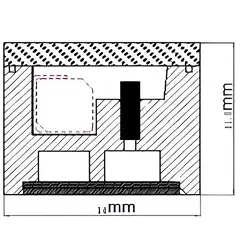
Normal Single Light Guide Structure
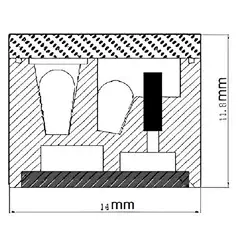
Single Light
Guides with Transmission
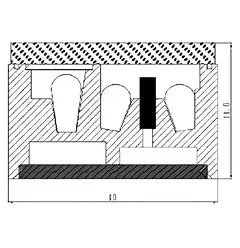
Double Light
Guides with Transmission
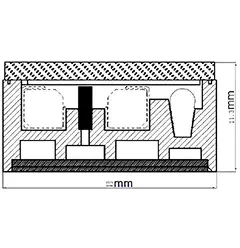
UV Light Guide with Transmission
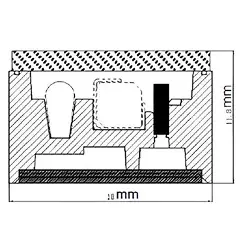
Normal Single Light Guide with Transmission
CIS IMAGE
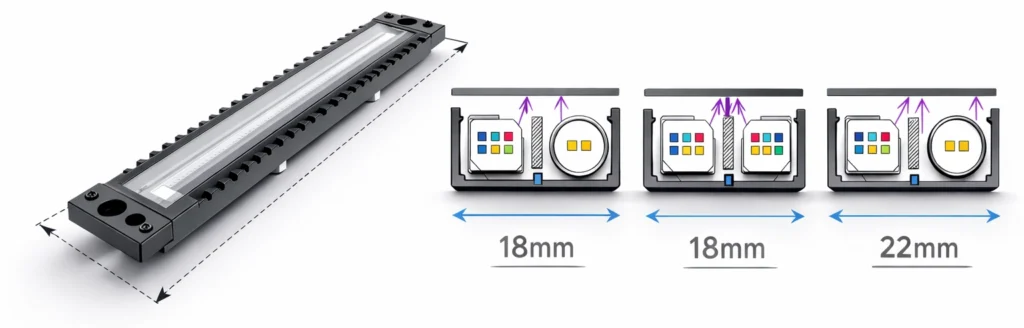
The All-in-One Solution
The All-in-One banking CIS solutions integrate three reading modes in a single compact 18 mm module:
- Reflective,
- Transmissive,
- UV.
In a single unit, the combination of Reflection + Transmission + UV allows you to capture:
- the reflection image of the surface (print and colors),
- the image transmitted through the banknote (transparent elements such as watermarks and threads),
- UV information (fluorescent markings).
This approach concentrates multiple inspection modes in the same body, avoiding the integration of separate modules.
Key points
- Integrated multi-illumination: reflection and transmission sources with color/IR/UV channels depending on the configuration.
- Unique architecture: a single module to combine reflection, transmission and UV.

Tape Detection CIS
Multispectral dual illumination CIS for optical tape detection on banknotes.
Technical description
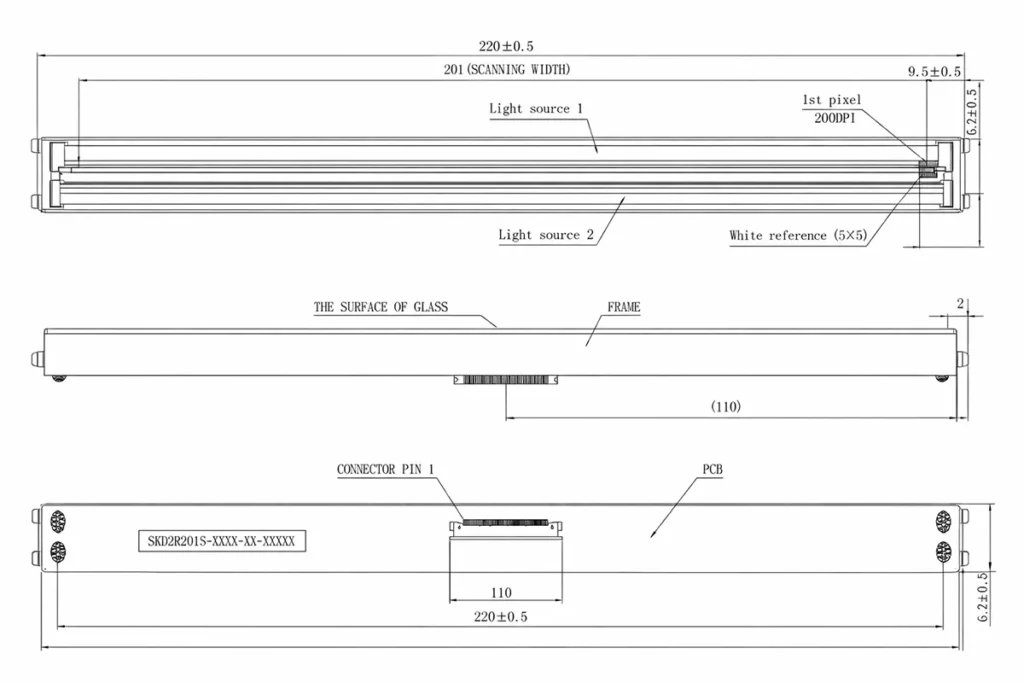
The Tape Detection CIS is a Contact Image Sensor developed to optically identify the presence of adhesive tape on banknotes. The module integrates a 201 mm scan width, a density of up to 200 DPI, a double-row rod lens optic, and a focus of 0.9 mm from the glass surface. The architecture uses two reflective light sources: the first with Red, Green, Blue, and IR 940 nm LEDs; the second with Red, Green, Blue, IR 940 nm, and UV 365 nm LEDs. This configuration allows for the acquisition of different spectral responses of the adhesive material and the detection of both reflective and invisible tapes depending on the wavelength used.
Operating principle
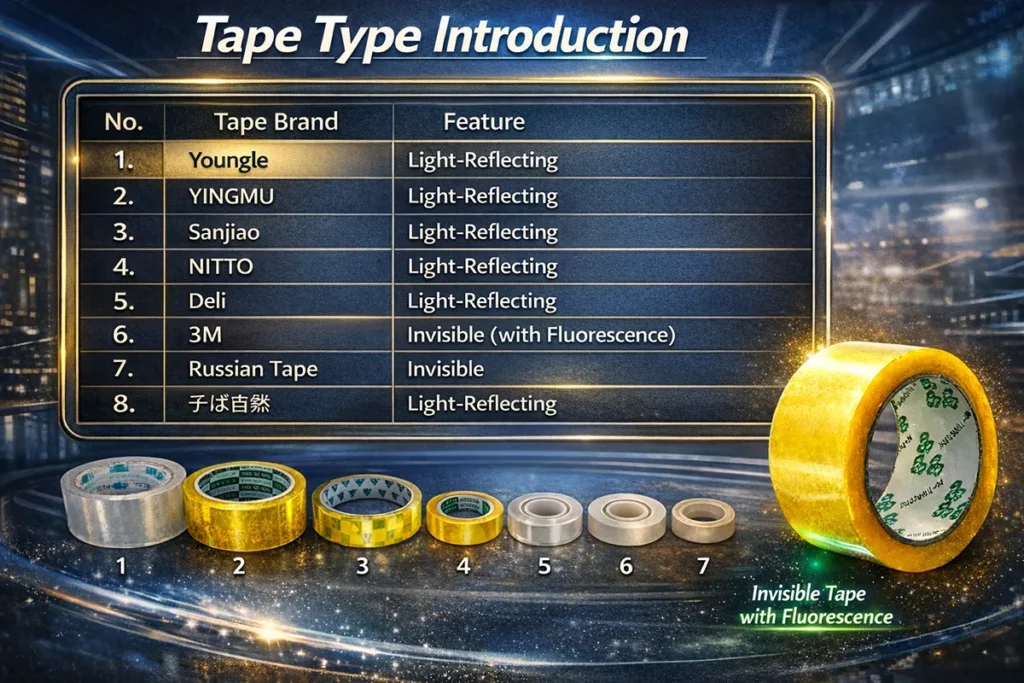
The sensor captures the reflected image across the entire useful width of the document. The technology is demonstrated on eight types of tape: the IR image highlights different behaviors of the tapes applied to the banknote, while the UV image specifically highlights tape no. 6.
Main features
- Scanning width: 201 mm.
- Sensor density: 100/200 DPI.
- Optics: Double-row rod lens array.
- Focus: 0.9 mm from the glass surface.
- Light source 1: Red 630 nm, Green 520 nm, Blue 465 nm, IR 940 nm
- Light source 2: Red 630 nm, Green 520 nm, Blue 465 nm, IR 940 nm, UV 365 nm.
- Integrated white reference.
- Power supply: +3.3 V, 270 mA.
- Output: 6 blocks SIG1–SIG6.
- Nominal mechanical size: 220 ±0.5 mm, with scanning width 201 mm.
Electrical and mechanical integration
The module uses a 36-pin FFC connector with dedicated lines for the six output signals, power, VREF, CNT, SI, CLK, and separate power supplies for the two light sources. The reported operating conditions are 0–50°C and 10–90% RH non-condensing.
Application
This module is designed for systems where tape detection must be performed with high-definition linear acquisition and multiple wavelengths, while maintaining a compact and integrated CIS structure.